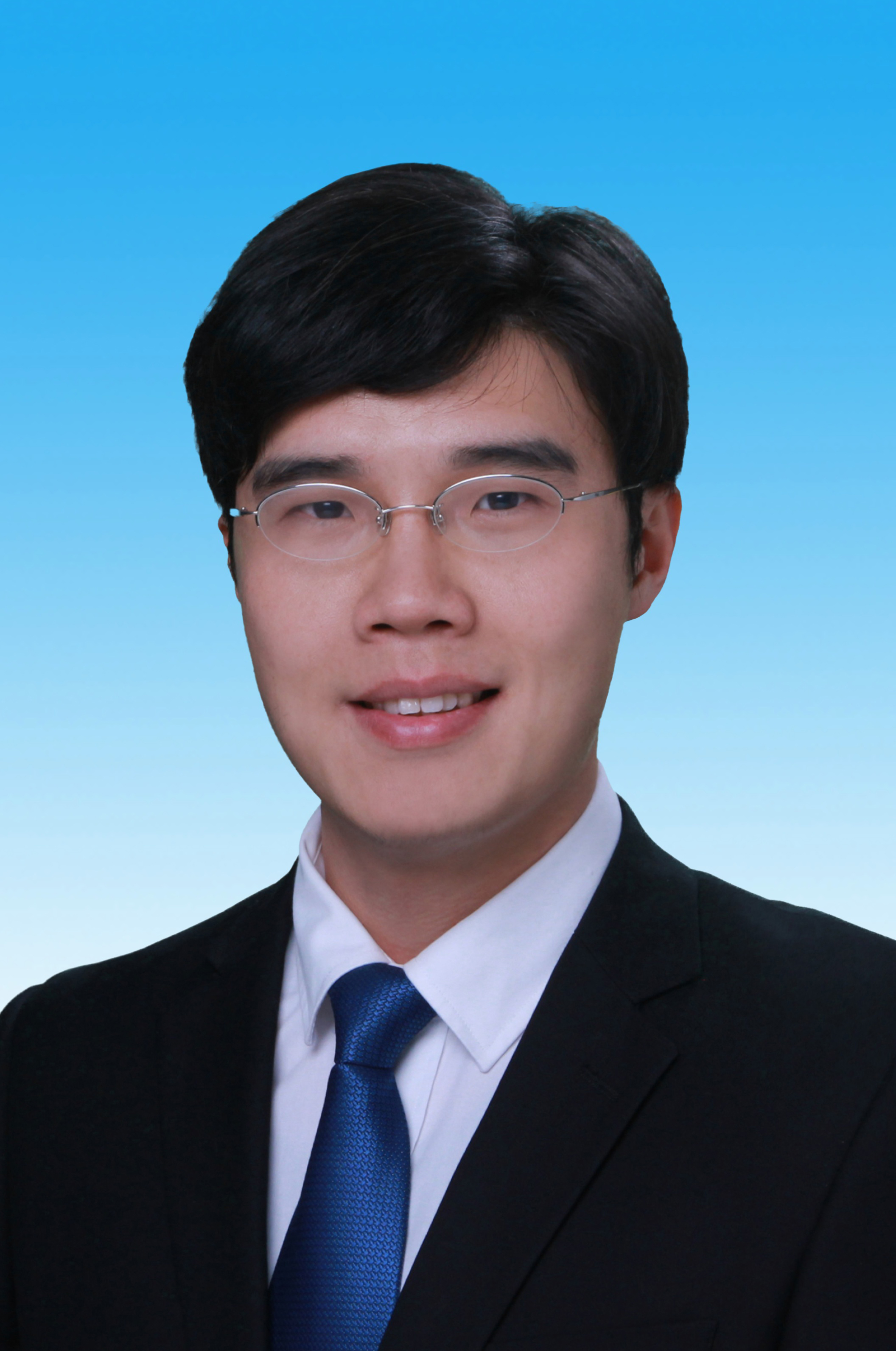
伊鸣神经生物 ,研究员
电话:82805083
邮箱:mingyi@hsc.pku.edu.cn
地址:
主要学习及工作经历
2002年毕业于北京大学医学部临床医学专业获医学学士学位。
2009年毕业于英国伦敦大学学院(University College London, UCL)获博士学位。
2012年2月起担任北京大学神经科学研究所研究员。
2023年11月起担任北大医学部(泰州)医药健康产业创新中心项目首席科学家。
主要学术任职
中国神经科学学会理事。
北京神经科学学会常务理事,副秘书长。
获奖情况
2017年北京大学医学部教学优秀奖
2015年国家科学技术进步奖二等奖
2014年北京神经科学学会第二届青年学术演讲比赛一等奖
2013年北京高校第八届青年教师教学基本功比赛一等奖,最受学生欢迎奖,最佳演示奖
2013年北京大学医学部教学优秀奖
2012年北京大学第十二届青年教师教学演示竞赛(医科类)一等奖
2012年北京大学基础医学院第十二届青年教师教学演示竞赛一等奖
研究方向
记忆解码、操控与功能重建
学习与记忆是重要的脑高级认知功能,而顽固的病理性记忆又是创伤后应激障碍、慢性痛等神经精神疾病的共同核心机制。近数十年来,认知神经科学家陆续在脑内发现位置细胞、网格细胞、记忆印迹细胞等多种功能特异性神经元群,在神经元和神经网络层面揭示学习记忆等脑高级功能的生物学基础。我们联合应用在体与离体电生理记录、双光子钙成像、光/化学遗传学、分子生物学等多项先进技术,从神经元与神经回路层面理解记忆(Nat Commun 2026、Adv Sci 2025、Sci Adv 2020)、创伤记忆(PLoS
Biol 2024)和慢性痛记忆(Autophagy
2024、Nat
Commun 2024、Cell Rep 2023; 2022; 2019)的机制,并据此针对性开发相关神经精神疾病的新型临床诊疗策略与方法(IEEE
Trans Med Imag 2026、Med Image Anal 2024、Brain Behav Immun
2024)。
基金来源
• 2026年国家自然科学基金(32571267)
• 2025年北京自然科学基金(5252007)
• 2024年国家重点研发计划生物与信息融合专项(2024YFF1206505)
• 2023年国家自然科学基金(32271053)
• 2023年北京市自然科学基金-海淀原始创新联合基金(L222016)
• 2019年国家自然科学基金(31872774)
• 2018年北京自然科学基金(5182013)
代表论文
-
Zheng Y,
Tong J, Xing Y, Shao S, Liu N, Liu S, Wu J, Yin W, Wang J, Yuan S, Cui K, Qi X,
Cui S, Wan Y, Yi M. Parvalbumin-positive neurons in the medial septum
participate in the formation of hippocampal-dependent spatial memory. Nat Commun. 2026;17(1):4259
-
Yin W, Huang C, Chen L, Huang X, Wang Z, Bian Y,
Zhou Y, Wan Y, Han T, Yi M. Facilitate robust early screening of cerebral palsy via general movements assessment with multi-modality co-learning. IEEE Trans Med Imag. 2026; 45(5):1847-1857
-
Tong J, Xing Y, Zheng Y, Wang L, Shao S, Wu J, Ma L, Liu S, Liu N, Qi X, Wang T, Cui K, Cui S, Wan Y, Yi M. Long-term memory updating parallels altered awake and sleep hippocampal replays. Adv
Sci. 2025; 13(3):e16480
-
Ma L, Yue L, Liu S, Xu S, Tong J, Sun X, Su L, Cui S, Liu FY, Wan Y, Yi M. A distinct neuronal ensemble of prelimbic cortex mediates
spontaneous pain in rats with peripheral inflammation. Nat Commun. 2024;15(1):7922
-
Wang J,
Gao S, Fu S, Li Y, Su L, Li X, Wu G, Jiang J, Zhao Z, Yang C, Wang X, Cui K,
Sun X, Qi X, Wang C, Sun H, Shao S, Tian Y, Gong T, Luo J, Zheng J, Cui S, Liao
F, Liu F, Wang D, Wong CCL, Yi M, Wan Y. Irisin reprograms microglia
through activation of STAT6 and prevents cognitive dysfunction after surgery in
mice. Brain Behav Immun. 2025;125:68-91
-
Cui K, Qi X, Liu Z, Sun W, Jiao P, Liu
C, Tong J, Sun X, Sun H, Fu S, Wang J, Zheng Y, Liu T, Cui S, Liu F, Mao J,
Zheng J, Wan Y, Yi M. Dominant activities of fear engram cells in the
dorsal dentate gyrus underlies fear generalization. PLoS Biol. 2024. 22(7):e3002679
-
Yin W,
Chen L, Huang X, Huang C, Wang Z, Bian Y, Wan Y, Zhou Y, Hang T, Yi M. A
self-supervised spatio-temporal attention network for video-based 3D infant
pose estimation. Med Image Anal. 2024. 96:103208
-
Fu S,
Sun H, Wang J, Gao S, Zhu L, Cui K, Liu S, Qi X, Guan R, Fan X, Liu Q, Chen W,
Su L, Cui S, Liao F, Liu F, Wong CL, Yi M, Wan Y. Impaired neuronal macroautophagy
in the prelimbic cortex contributes to comorbid anxiety-like behaviors in rats
with chronic neuropathic pain. Autophagy. 2024. Mar 24:1-18
-
Shao S,
Zheng Y, Fu Z, Wang J, Zhang Y, Wang C, Qi X, Gong T, Ma L, Lin X, Yu H, Wan Y,
Zhang H, Yi M. Ventral hippocampal CA1 modulates pain behaviors in mice
with peripheral inflammation. Cell Rep. 2023; 42(1): 112017
-
Qi X,
Cui K, Zhang Y, Wang L, Tong J, Sun W, Shao S, Wang J, Wang C, Sun X, Xiao L,
Xi K, Cui S, Liu F, Ma L, Zheng J, Yi M, Wan Y. A nociceptive neuronal
ensemble in dorsomedial prefrontal cortex underlies pain chronicity. Cell
Rep. 2022; 41(11):111833
-
Sun H,
Fu S, Yin X, Sun X, Qi X, Cui K, Wang J, Ma L, Liu FY, Cui S, Liao FF, Wang XH, Yi M, Wan Y. Development of CRISPR-SaCas9 system for projection- and function-specific
gene editing in the rat brain. Sci Adv. 2020; 6: eaay6687
-
Ma L,
Yue L, Zhang Y, Wang Y, Han B, Cui S, Liu FY, Wan Y, Yi M. Spontaneous
pain disrupts ventral hippocampal CA1-infralimbic cortex connectivity and
modulates pain progression in rats with peripheral inflammation. Cell Rep.
2019;29:1579–1593

 微博
微博